Junk Car Code Enforcement in Texas Cities
Published July 4, 2026 · CashMyCarTX Texas car-selling guide

What that certified letter about your vehicle actually means, and how fast you need to move
A notice showed up — maybe taped to your door, maybe certified mail you had to sign for — telling you the inoperable car in your driveway or side yard is a code violation. It can read like a threat, but it's really a deadline with a clear way out. Every major Texas city has a junk vehicle ordinance, and while the wording differs city to city, the pattern is consistent enough that once you understand one, you understand what's coming in the others.
What actually counts as a "junk vehicle" under Texas city codes?
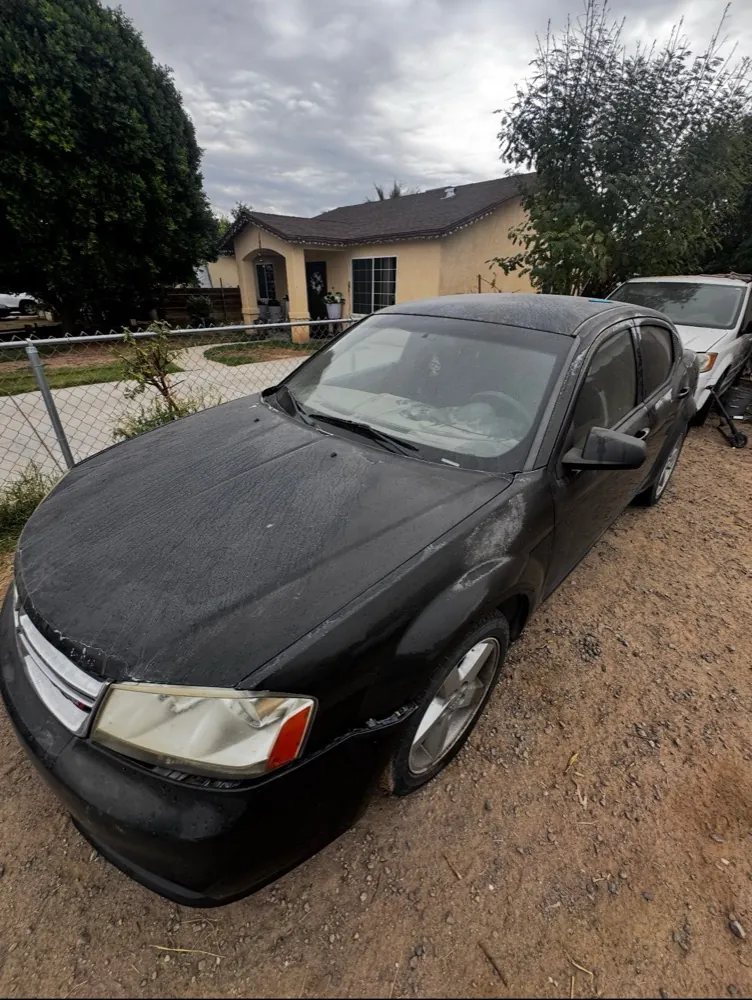
The definitions are more specific than "an old car in the yard." In Houston, a junked vehicle is defined under the municipal code as a self-propelled vehicle with expired registration that is wrecked, dismantled, partially dismantled, discarded, or inoperable, and has remained in that condition for more than 30 consecutive days. San Antonio's ordinance, codified in Chapter 19, Article X of its Code of Ordinances, defines a junked vehicle similarly but with a shorter clock: a vehicle in ordinary public view that remains inoperable for a continuous period of 10 days. Dallas's Code Compliance department defines junk motor vehicles as vehicles that are inoperative and/or partially dismantled and carry expired license tags or safety inspection stickers. Fort Worth's code, under Chapter 22, Section 22-303, similarly declares junked vehicles on private property a public nuisance and lays out its own abatement and removal procedure.
The common thread across all four cities: it's not about how the car looks, it's about registration status and operability, sustained for a set number of days. A car that's simply old but registered, inspected, and running isn't a violation anywhere in Texas. A car with expired tags sitting immobile for weeks is a violation almost everywhere.
There's also a legal distinction worth knowing between "junked" and "abandoned." Houston's code enforcement materials draw this line clearly: a junked vehicle is typically inoperable or unregistered and constitutes a nuisance regardless of who owns the property it's on, while an abandoned vehicle doesn't have to be inoperable or unregistered at all — it just has to be left unattended without permission on someone else's property, public or private. Different problem, same towing outcome if it isn't resolved.
What happens after the notice, and how much time do you actually have?
The process is broadly similar across the state's largest cities, built around a notification-then-abatement structure:
Houston: Enforcement orders generally require the property to come into compliance within 30 calendar days, unless the city agrees in writing to extend that deadline for good cause. Fines for violations range from $200 to $2,000 depending on the case.
Dallas: When Code Compliance identifies a junk vehicle violation, the registered owner and any lienholders are notified by certified mail. If the owner doesn't remove the vehicle or prove it's operable within the notice period, the city has it towed and sold for salvage. Dallas's code enforcement is also jurisdictionally split — Code Compliance handles private property, while junk vehicles left on a public street fall under the Dallas Police Department instead.
San Antonio: Fines escalate with repeat violations, with a minimum fine around $100 and a maximum around $200 per conviction under the municipal court schedule tied to Chapter 19, Article X.
Fort Worth: The city's Code Compliance Department can pursue non-monetary remedies as well as fines — abatement orders, repair or demolition orders, and liens on the property — and repeat or continuing violations can trigger increased or daily penalties rather than a single flat fine.
Across all four, the practical reality is the same: you get a written notice, a defined window (commonly around 30 days, though San Antonio's underlying "inoperable" clock is much shorter at 10 days before something even qualifies as junked), and an opportunity to fix it before the city tows the vehicle itself.
Can you just store the car out of sight instead of getting rid of it?
In some cities, yes — with conditions. Dallas's ordinance guidance specifically notes that owners may store an inoperable vehicle inside a garage to avoid towing, since the violation generally hinges on public visibility and exposure, not merely on owning a car that doesn't run. Houston's code language points the same direction: junked vehicles must be removed or completely enclosed in a building in a way that isn't visible from the street or from other public or private property. If you have covered, enclosed storage and no interest in dealing with the vehicle right away, that can buy time. If you don't — and most driveways and side yards don't offer real concealment — the 30-day clock is the one that matters.
How do you resolve a junk vehicle notice before it escalates to towing and fines?
A straightforward sequence works in every city with this kind of ordinance:
- Read the notice for the specific deadline and code section cited — Houston, Dallas, San Antonio, and Fort Worth each reference their own chapter and section, and that citation tells you exactly which standard you're being held to.
- Determine if the vehicle can legitimately be made operable and registered within the window — if yes, fixing registration and inspection resolves the violation outright.
- If it can't realistically be repaired or re-registered in time, move it off public view or off the property entirely before the deadline, rather than waiting for a courtesy extension that isn't guaranteed.
- Get proof of resolution — a bill of sale, tow receipt, or dated photo showing the vehicle is gone or enclosed — in case the city follow-up inspection happens before your own paperwork catches up.
- Respond in writing if you need more time, since several cities, including Houston, allow deadline extensions only when there's a written good-cause agreement on file, not an informal request.
What actually triggers a complaint in the first place?
Most junk vehicle enforcement doesn't start with a proactive city inspection — it starts with a neighbor's complaint. Houston's code enforcement process, like Dallas's, generally opens a case after a 311 report or a formal complaint from someone nearby, then an inspector visits to confirm the vehicle meets the code definition before any notice goes out. Dallas explicitly directs residents to call 311 to report a suspected violation on private property, with the Dallas Police Department handling the same kind of complaint if the vehicle is sitting on a public street instead of on private land.
This matters because it means enforcement is uneven by design — two identical inoperable cars, one in a neighborhood with attentive neighbors and one on a quiet rural lot, can have very different enforcement timelines. It also means that once a complaint is filed, the clock the city gives you to resolve it (the 30-day windows common in Houston and Fort Worth, the shorter 10-day inoperability threshold in San Antonio) starts regardless of whether you agree the car is a nuisance. Ignoring the notice doesn't slow the clock down; it just means the city's next contact is a tow order instead of a warning.
What happens if you simply don't respond to the notice?
The escalation path is consistent with how Texas Transportation Code Chapter 683 treats abandoned vehicles statewide, even if the specific fine amounts differ by city. After the compliance window lapses, cities generally move to remove the vehicle themselves and place it into a lien or salvage process — Dallas's ordinance describes this directly: the city tows and sells the vehicle for salvage once the deadline passes without resolution. Fort Worth's code compliance process allows for liens against the property itself when violations go unresolved, on top of escalating or daily fines for continuing violations. None of these outcomes return meaningful value to the owner — a city-ordered tow and salvage sale is not designed to maximize what you get for the vehicle, only to clear the nuisance and recover the city's costs.
This is the core reason acting inside the notice window matters more than the specific fine amount. A $200 Houston fine or a $100 San Antonio fine is a nuisance; losing control of when and how the vehicle gets removed, and getting nothing for it once the city tows it, is the more expensive outcome in practice.
What if the car genuinely isn't worth fixing?
This is the situation most junk vehicle notices actually describe: a car that's inoperable, unregistered, and not worth the cost of repair or re-inspection. In that case, the fastest way to clear a code violation isn't fighting the citation or hoping for an extension — it's removing the vehicle before the deadline arrives. Selling it, rather than waiting for a city-ordered tow and salvage sale where you have no say in the outcome or the value recovered, keeps you in control of the timeline and the payout.
Enforcement looks a little different in Houston, Dallas, San Antonio, and Fort Worth, but in all four, getting the car off the property is what actually resolves the notice. CashMyCarTX picks up inoperable, unregistered, and junk-titled vehicles across Texas, often fast enough to clear a code violation before the fine deadline hits, which means you can resolve it on your own terms and your own timeline instead of the city's. If the violation is tied to fluids leaking onto the property, Texas's environmental disposal rules for batteries and fluids explain what the city may actually be citing you for.
Call (214) 617-0955 to talk through your specific notice and deadline, or request a same-day offer at https://cashmycartx.com/contact.
The bottom line
Junk vehicle ordinances in Houston, Dallas, San Antonio, and Fort Worth all follow the same basic shape — a specific definition tied to registration and operability, a notice period generally around 30 days, and a real risk of towing, fines ranging from roughly $100 in San Antonio up to $2,000 in Houston, or liens in Fort Worth if the deadline passes unresolved. None of that has to play out as a standoff with code enforcement. Once you know the deadline in your notice, removing the vehicle — by sale rather than by city tow truck — is usually the fastest and most financially sensible way to close the file.
Ready to get a real number for your car? Get an instant cash offer from CashMyCarTX — free towing anywhere in Texas.
Recently Purchased Vehicles Across Texas
Illustrative examples — not live transaction data.