Quoted $800 on the Phone, Offered $250 at the Curb
Quoted one price, offered far less when the tow truck shows up? Why curbside re-quotes happen in Texas and what to demand from any buyer's driver.
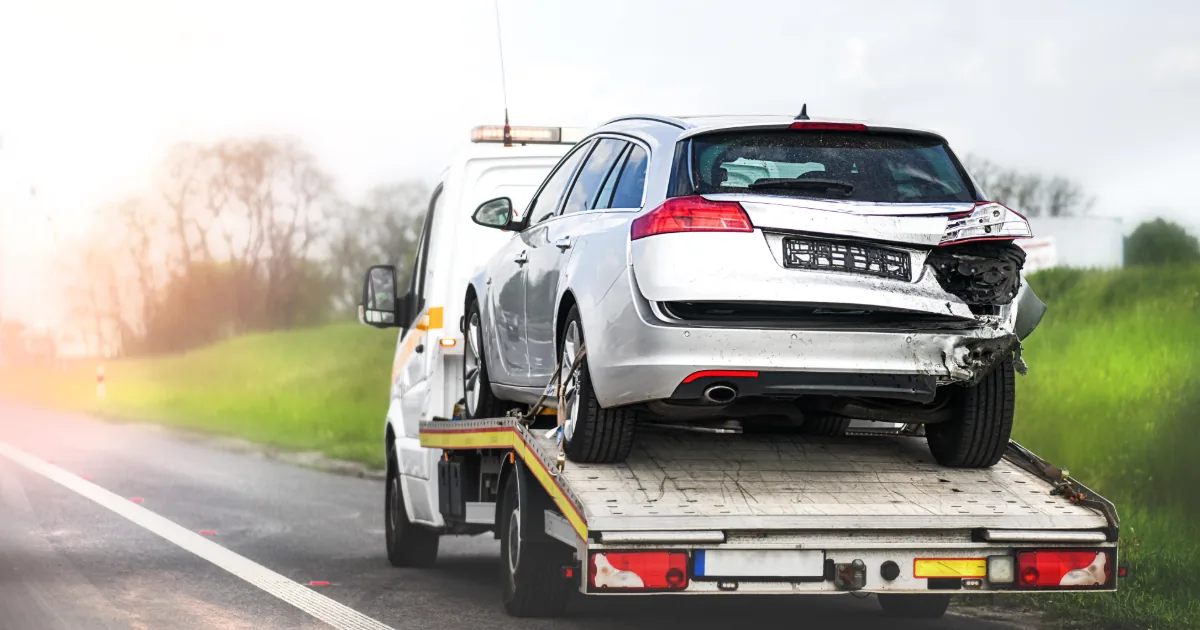
You took the morning off work. The tow truck is in your driveway, your car is already winched halfway onto the flatbed, and the driver walks over with a number nothing like the one you agreed to on the phone. Maybe the yard reassessed it. Maybe his boss will not approve the original figure. Either way, you are doing math you did not plan on doing.
This is the most common complaint in the junk car business, and it is worth being precise about why it happens. It is not always fraud — sometimes the number genuinely should move, because the car is not what was described. But the tactic works even when it is dishonest, for one reason: it lands at the exact moment you have the least room to walk away. Knowing the difference between a fair adjustment and a squeeze is what keeps a few hundred dollars in your pocket.
On this page · 12 sections
- Why does the offer change when the tow truck arrives?
- Which price adjustments are actually legitimate?
- Which adjustments are just leverage?
- How do I stop the re-quote before the truck rolls?
- What should a written quote actually say?
- What do I say if the driver lowers the offer at the curb?
- Can I refuse after the car is already on the truck?
- Is a curbside price drop illegal in Texas?
- What should I do after the sale to close the loop?
- How CashMyCarTX handles pickup-day pricing
- Bottom line
- Pickup-Day Pricing FAQ
Why does the offer change when the tow truck arrives?
Because that is the exact moment your leverage is weakest, and everyone in the transaction knows it. Up until the truck shows up, you have options: you can call three more buyers, you can wait a week, you can say no and lose nothing. The second your car is winched onto a flatbed, all of that quietly reverses.
You have already cleared your schedule and told yourself the car is gone. Refusing now means starting over — more calls, another day off — plus a nagging worry that you might get billed for a wasted tow. A buyer who re-quotes at the curb is not really arguing about the car's value. They are betting on how much friction you will absorb to avoid starting over.
Which price adjustments are actually legitimate?
A fair re-quote points at something specific, physical, and material that was not in the description you gave. The test is whether the driver can walk you to the car and show you the thing.
These are the adjustments that hold up:
- The catalytic converter is gone. This is the big one — often the most valuable single component on an otherwise worthless car. If it has been cut off, the vehicle is worth meaningfully less, and if you did not know, that is an honest surprise for both of you.
- The engine or transmission is missing. A car that "does not run" and a car with "no engine" are very different products.
- Wheels, tires, doors, or the hood are gone. Anything already parted off changes the math.
- The title is not what you described. A clean title that turns out to be salvage, in someone else's name, or missing entirely genuinely changes what the buyer is acquiring.
- Undisclosed flood or fire damage. These carry consequences well beyond cosmetics.
- The car is not accessible as described. A vehicle behind a locked gate, blocked in, or needing a winch out of a back yard costs more to recover than one at the curb.
Notice what all six share: each is a fact you could verify yourself in thirty seconds, standing next to the car. That is the mark of a real adjustment.
Which adjustments are just leverage?
The tell is vagueness. An honest adjustment names a part, a document, or an access problem. A leverage play names a feeling, a market, or an absent authority figure.

Be skeptical of any of these:
- "Scrap prices dropped this morning." Commodity prices do move — which is why a legitimate quote states an expiration window up front, rather than springing one after the truck is loaded.
- "My manager will not approve that number." If approval was required, that was true when the quote was issued.
- "It is in worse shape than they told me" — with no specific part named. Ask which part. The answer, or the absence of one, tells you everything.
- "That price did not include towing." If towing was advertised as free, a deduction appearing at the curb is a change to the deal, not a clarification.
- An offer that drops only once the car is physically on the truck, rather than during the walk-around. Timing is itself evidence.
None of this means every driver raising an issue is working an angle. Drivers are often subcontractors relaying a number someone else set. That is exactly why the fix is not arguing harder at the curb — it is removing the ambiguity before the truck is dispatched.
How do I stop the re-quote before the truck rolls?
Describe the car accurately, including the parts that hurt. This is the single highest-leverage thing a seller can do, and it is counterintuitive: volunteering the bad news up front is what protects your number.
Every honest deduction above becomes impossible the moment the buyer already knows. Say "the catalytic converter was stolen last year" on the quote call and the price already reflects it — nobody can use it as a lever later. A quote built on a complete description has nothing left to discover.
So when you describe the vehicle, cover these deliberately:
- Does it start, and does it drive — or only start?
- Title status: clean, salvage, rebuilt, missing, or in someone else's name.
- Are the converter, engine, and transmission still on the car?
- All four wheels on it — will it roll and steer?
- Any flood, fire, or hail history.
- Rough mileage and visible body damage.
- Where it sits and how a truck would reach it.
To see how those inputs become a number, our breakdown of how we calculate your offer walks through the same factors from the buyer's side. And if two quotes for the same car differ by hundreds of dollars, that usually comes down to the difference between a junkyard offer and a cash-buyer offer.
What should a written quote actually say?
A usable quote answers five questions in writing. A text message is fine; it does not need to be a contract.
- The exact dollar amount you will be handed, written as a number.
- Whether that amount is net of towing. Ask plainly: "Is that the number on the check after the truck loads it?" This one question closes the industry's most common loophole.
- How long the quote is good for. A real expiration window is a sign of an honest process, not a red flag.
- What specifically could change it. A good buyer will tell you: a missing converter, a title that is not clean, a vehicle a truck cannot reach.
- Who is coming. The towing company name, plus a dispatch number that can answer questions about your specific offer.
Keep that message on your phone. If a driver quotes something different in your driveway, you are not arguing from memory — you are reading a number back.
What do I say if the driver lowers the offer at the curb?
Ask one question, and make it a specific one: "Show me exactly what is different from what I described." Then stop talking and let the driver answer.
Everything follows from the answer. If the driver points at an empty space where the converter should be, you have learned something true, and the honest move is to weigh the new number on its merits.
If the answer is a shrug, a market reference, or an unnamed manager, say some version of this: "The quote I have in writing is $800, and nothing about the car is different from what I described. I am not agreeing to a different number today. Please leave it." You are allowed to say that calmly and then stop negotiating.
Two notes. Never sign the title and then argue about money — once it is handed over, your position is far weaker. And photograph the car before the truck arrives, including underneath if you can do so safely. A photo of an intact converter ends that conversation instantly.
Can I refuse after the car is already on the truck?
Yes. Until you sign the title over and accept payment, the sale has not happened, and a vehicle sitting on a flatbed in your driveway is still yours.

Ask the driver to set it back down. Most will, because a driver who has not completed a purchase has no claim to the vehicle. If one refuses, or claims you now owe a towing fee you never agreed to, stop negotiating — write down the company name and plate and call the office instead.
This is why that written quote should also confirm there is no charge if the pickup does not end in a sale — one sentence removes the fear the tactic depends on.
Is a curbside price drop illegal in Texas?
It depends entirely on the facts, and that is an honest answer rather than a dodge. A genuine adjustment for a genuinely undisclosed problem is ordinary commerce. A quote designed from the start to be abandoned once the car is loaded is a different thing.
Texas's principal consumer-protection statute is the Deceptive Trade Practices–Consumer Protection Act, in Business & Commerce Code Chapter 17. Whether it reaches a particular vehicle transaction depends on the facts and on who counts as the consumer in that deal — a question for an attorney, not a blog post, and nothing here is legal advice. What we can say plainly: if you believe a business misled you, the Texas Attorney General's consumer protection division accepts complaints, and that is how patterns get identified over time.
For most sellers, the realistic protection is not litigation over a few hundred dollars — it is the written quote, the honest description, and the willingness to say no.
What should I do after the sale to close the loop?
File the Vehicle Transfer Notification, Form VTR-346, with TxDMV. It is free, it takes a few minutes online, and it is the step that ends your exposure to whatever happens to that car next.
Once processed, the vehicle is flagged as sold on your record as of the date you provide. That matters because a junk car does not simply vanish — it may be resold, parted out, or moved between yards before paperwork catches up, and until the state knows it left your hands, toll violations and parking citations tied to that plate can still find you. TxDMV's buying-or-selling guidance covers the seller's side, and we cover the rest of the DMV paperwork that follows a Texas sale separately.
Keep your written quote, photos, and pickup receipt for a few months. If a dispute surfaces later, that folder is the entire record.
How CashMyCarTX handles pickup-day pricing
We quote from the description you give us, and that number is what your assigned buying partner's driver works from on arrival. If your description is accurate, the number holds. If something material is different — a missing converter, a title that is not what was described — the driver will show you the specific issue rather than gesture at the market, and you can decline and keep the car.
We buy vehicles across the state, including in Houston, Dallas, and San Antonio, and we would rather you hold any buyer — including us — against the checklist above than take our word for it. For a number to compare, get an instant cash offer or call (214) 617-0955 and ask the towing question directly.
Bottom line
The curbside re-quote works on timing, not arithmetic. It arrives when your car is on the truck and your alternatives have evaporated, counting on you deciding that arguing costs more than accepting. Take the timing away and the tactic collapses: describe the car honestly so there is nothing left to discover, get the number and the towing answer in writing before a truck is dispatched, photograph the car, and be willing to ask a driver to set it back down. A buyer who intends to honor their quote will not blink at any of that.
Our guide to avoiding junk car buyer scams in Texas covers the other patterns worth knowing, including fake payment schemes and pickup no-shows.
Ready for a real number? Get an instant cash offer — free towing anywhere in Texas.