Teen's First Car Totaled? What Texas Parents Should Do
Texas parent's guide after a teen's first car is totaled: insurance steps, title questions, and real TxDOT/NHTSA data — plus a fast, fair cash resolution.

A calm, practical guide for the hours and days right after the call
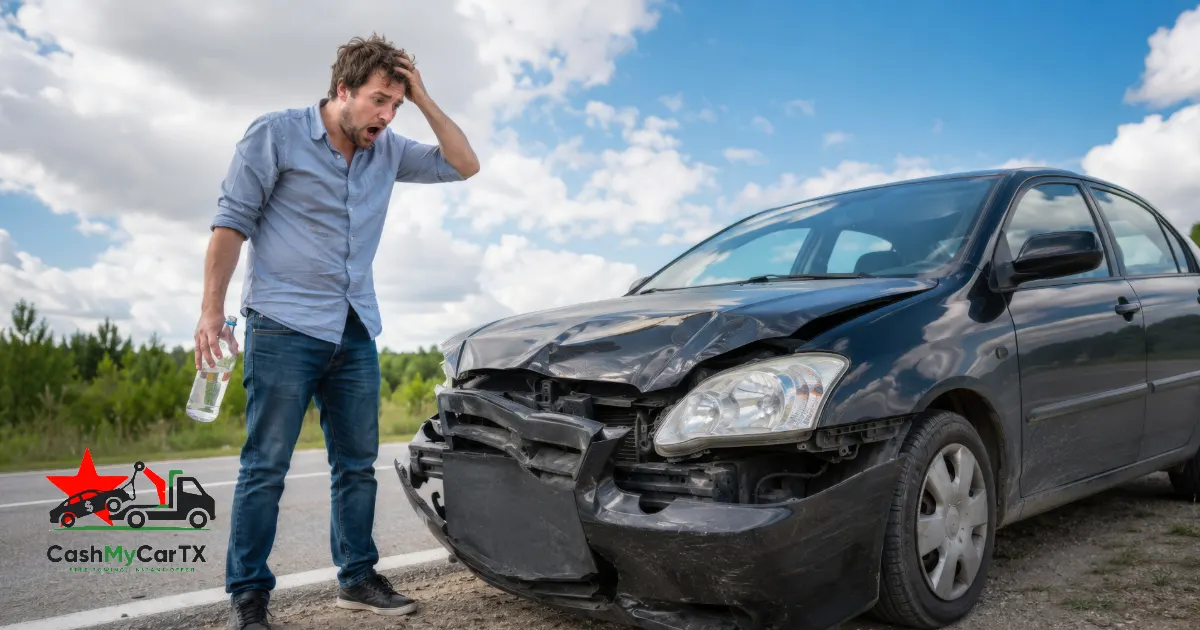
The phone call every parent dreads came, and the relief that your teenager is okay is quickly followed by a second wave: the car — maybe the one you spent months finding, or handed down from a grandparent, or saved up for together — is done. You're not thinking about insurance forms or vehicle titles right now. You're thinking about your kid. That's the right instinct, and it's also exactly why the practical side of this should be simple, fast, and handled by someone else for a minute. Here's what actually needs to happen next, in order, without any of it adding to the stress you're already carrying.
On this page · 8 sections
- What should you do in the first 24 hours?
- Why does this happen so often with teen drivers specifically?
- Whose name should be on the title, and does it matter now?
- Will this affect your teen's insurance and future driving?
- Should you fight for a repair, or take the total loss settlement?
- What do you do with the totaled car itself?
- What should you do next?
- Frequently Asked Questions
What should you do in the first 24 hours?
Confirm everyone is physically okay and get medical attention documented, even for symptoms that seem minor — soreness and adrenaline can mask injuries for a day or two, and an early medical record protects everyone if a claim gets complicated later. Once that's handled, the practical checklist looks like this:
- Get the police crash report number (Texas uses the CR-3 form, and TxDOT's crash records are where insurers pull their data from).
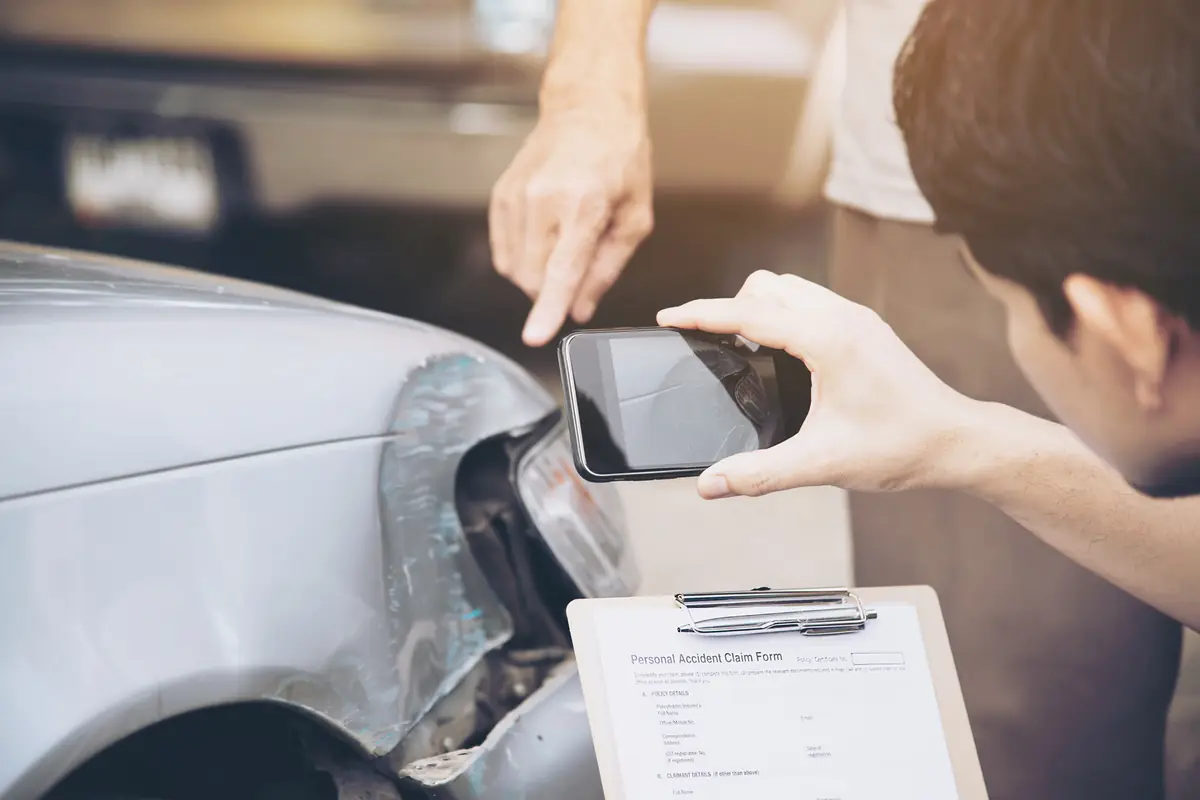
- Photograph the vehicle from all angles before it's towed, including the interior and odometer.
- Notify your insurance carrier within a few days, even if the other driver was clearly at fault.
- Ask directly whether the adjuster expects the vehicle to be declared a total loss, and get that answer in writing or by email, not just verbally.
Texas applies what's called a total loss formula: a vehicle is legally a total loss when repair costs plus salvage value equal or exceed the car's actual cash value before the crash — a 100% threshold, higher than the 60-80% thresholds many other states use. In practice, though, most insurers apply their own internal cutoff well below that, often once repair costs hit 70-80% of the car's value. For a teen's first car — frequently an older, lower-value vehicle to begin with — that threshold gets crossed fast, sometimes with damage that looks worse than it is and sometimes with damage that looks better than it is.
Why does this happen so often with teen drivers specifically?
It's worth looking at the real numbers here, not to scare anyone, but because understanding the pattern helps you make sense of what just happened — and it usually isn't about your kid being reckless. According to NHTSA, drivers ages 16-19 are involved in 4.8 fatal crashes per 100 million miles traveled, compared to 3.3 for drivers 20-24 — a rate tied directly to inexperience, not just age. NHTSA's 2024 data recorded 2,565 teen motor-vehicle occupant deaths nationally, and drivers under 21 made up about 8.5% of drivers in fatal crashes despite being only 5.1% of licensed drivers, according to NHTSA figures cited by national safety researchers.
In Texas specifically, a widely cited analysis from Texas Community Health News, drawing on NHTSA data, found that rural parts of the state carry the highest rate of fatal crashes involving young drivers, with West Texas showing the greatest risk — while the denser Dallas-Fort Worth corridor saw comparatively lower rates. The same report noted that young drivers face elevated risk during summer months, and that TxDOT recorded 45% of teens killed in 2021 crashes were not wearing seat belts — a detail worth mentioning to your own teen once the dust settles, not as a lecture but as a fact that matters.
The point of these numbers isn't to make anyone feel like a statistic. It's to say plainly: this is a common, well-documented part of the teen driving years, and the system — insurance, DPS, the DMV — has a routine, established path for handling it. You're not improvising something rare.
Whose name should be on the title, and does it matter now?
If the car was titled in a parent's name — common for a teen's first car, often for insurance and financing reasons — the total loss settlement check will be issued to the titled owner, which simplifies things considerably. The insurer pays the titleholder, and that person decides what happens next, whether that's paying off any remaining loan, applying it toward a replacement vehicle, or handling it however the family sees fit.

If the title was in the teen's name, the same rules apply, but a parent may need to assist with paperwork depending on the teen's age and any lienholder involved. Texas DMV requires the actual titled owner's signature on the release of the salvage or total-loss title, and if a parent is managing this on the teen's behalf, Texas has a specific limited power of attorney form (VTR-271-A) that county tax-assessor offices will accept — general or out-of-state POA forms are commonly rejected for vehicle title transactions, so it's worth using the correct form from the start rather than getting bounced back at the counter.
If there's a lien on the vehicle, the payout typically goes first to the lienholder, with any remaining balance going to the owner. Ask your adjuster directly how the check will be structured before you make plans around the total.
Will this affect your teen's insurance and future driving?
This is usually the second wave of worry once the immediate crisis passes — what does this crash mean going forward? A single at-fault accident typically raises premiums for a period of time, and Texas insurers can factor a teen's crash history into rates for several years. But it's worth keeping perspective: a first-car accident, especially a minor or single-vehicle one, is common enough that insurers have standard, well-established rate adjustments for it — it's not a mark that follows a young driver indefinitely, and it's rarely the financial catastrophe it feels like in the first week.
What matters more going forward is what the two of you take from it. If speeding, distraction, or a missed seatbelt played a role, that's worth an honest, non-punitive conversation — not because your teen needs to feel worse about what already happened, but because TxDOT's own data (45% of teens killed in 2021 crashes weren't belted) shows how much a small habit change affects real outcomes. If it was simply inexperience meeting a hazard every new driver eventually meets — a wet road, a driver who didn't yield, a deer at dusk — then it's simply proof that the learning curve for driving is real, and the data backs that up rather than singling your kid out.
Should you fight for a repair, or take the total loss settlement?
This is where a lot of families get stuck, and understandably so — the car has meaning beyond its dollar value, and there's often a temptation to push back on the total loss decision to "save" it. But the math is usually not on that side. A teen's first car is frequently an older, lower-value vehicle, which means it hits the insurer's internal total-loss threshold with comparatively minor damage. Fighting to keep it repairable often means paying out of pocket for the gap between the settlement and actual repair costs, then owning a car with a branded title that's worth less and harder to insure going forward — not the outcome most families actually want once they think it through.

The faster, and usually better, resolution is to accept the total loss settlement, then decide separately — with a clear head, maybe a few days later — what the next car looks like. Some families keep the damaged vehicle temporarily (as a project car, for parts, or just because they haven't had time to deal with it) and that's fine too. But if the goal is to close this chapter and get your teen safely back on the road, a clean, fast cash resolution beats a drawn-out repair argument almost every time.
What do you do with the totaled car itself?
Once you have the settlement figured out (or even if you're paying out of pocket without going through insurance at all), the leftover vehicle still needs to go somewhere. Many parents don't realize a damaged, non-running, or salvage-titled car still has real cash value — towing companies and some local buyers will lowball a family that just wants it gone quickly, especially when there's an emotional rush to move past the incident.
A statewide buyer can make this part simple: a real offer based on the car's actual condition, free towing in most cases, and payment on pickup — no separate repair estimate needed, no listing it yourself, no strangers coming to look at a car your teenager was just in an accident in.
What should you do next?
If your teen's first car has been totaled, the practical part of this doesn't need to drag out. CashMyCarTX buys damaged and totaled vehicles across Texas, so parents dealing with this right after a wreck have one less thing to chase down. That includes families in Austin and San Antonio, where a lot of the teen crash data in this piece comes from, with straightforward offers based on the car's real condition — whether it's still driveable, has a branded title, or needs to be towed from where it sits. It also helps to understand why total-loss offers have been shifting statewide in 2026, since that's what determines what the insurer actually pays out.
Call (214) 617-0955 when you're ready, or get a real cash offer and close this out on your own timeline, not the insurance company's or a tow yard's. Take care of your teen first — the car will still be here when you're ready to deal with it.
Ready to get a real number for your car? Get an instant cash offer from CashMyCarTX — free towing anywhere in Texas.